
Cesspool vs Septic Tank: Costs, Lifespan, Laws, Best Option 2026
- David Warren
- January 1, 2026
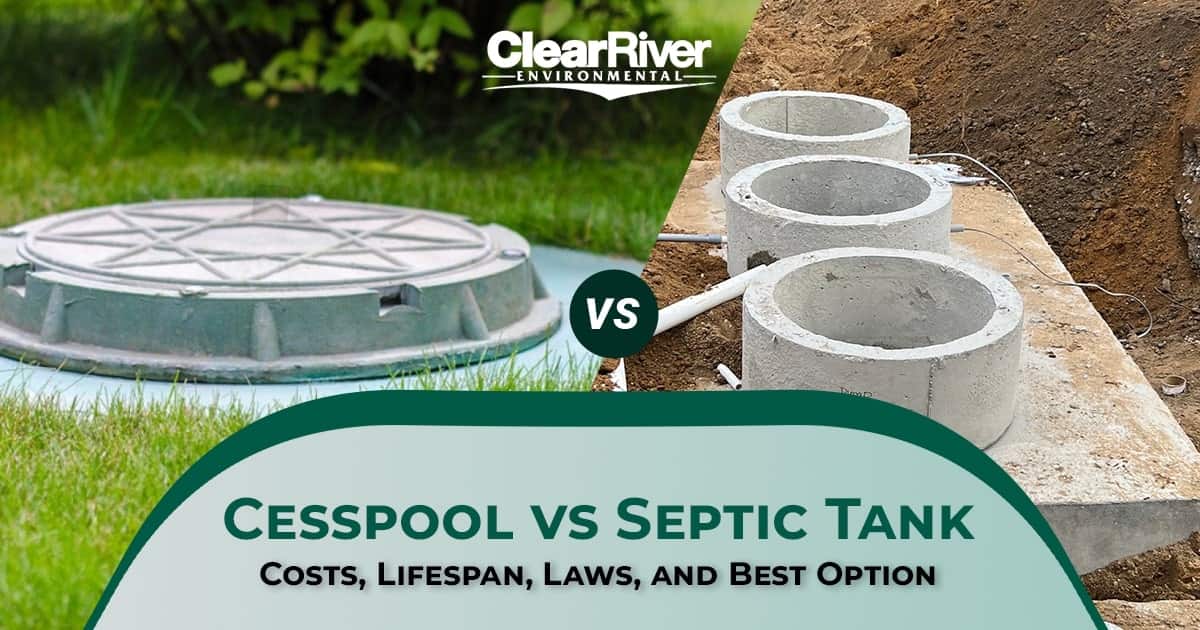
A cesspool (also called a cesspit) is basically an underground sewage storage tank that collects all wastewater from your home in a single pit. The pit is often lined with concrete rings or stone, and it allows liquids to seep out through perforated walls into the surrounding soil, while solids remain in the pit to break down slowly. There is no outlet pipe or treatment in a cesspool; it’s essentially just a holding hole for sewage. Over time, sludge accumulates and the cesspool can overflow or clog, so regular pumping is needed to remove waste.
A septic system, by contrast, actively treats and manages wastewater. A typical septic system has a septic tank and a drain field (leach field). Wastewater flows from the house into the septic tank, where solids settle to the bottom and oils float to the top, and naturally-occurring bacteria break them down.
The clarified liquid then exits to the drain field (a network of perforated pipes buried in soil), where it undergoes further filtration by the soil before reaching the groundwater. Septic tanks have both an inlet and outlet (unlike cesspools), and they hold the solid waste while allowing treated effluent to safely disperse underground. This two-stage process means septic systems remove more contaminants and protect groundwater better than cesspools.
In This Article
Cesspool vs Septic: How Each System Works
How a Cesspool Works
All household waste pipes lead to a single underground cesspool “tank” (often a concrete-lined pit). Wastewater flows in, and liquids drain out through the porous walls into the surrounding ground. The solids and sludge remain in the pit and gradually break down anaerobically.
Because everything mixes together in a cesspool, the liquid that leaches out is highly contaminated and can pollute soil and groundwater. There are no mechanical parts in a cesspool and no separate drain field. Over time, the surrounding soil can become oversaturated with sewage and clogged.
This is why cesspools often fail or overflow if not pumped frequently. Cesspools were common in older homes because they were simple and cheap, but they pose health and environmental risks.
How a Septic System Works
A septic system has multiple components to manage waste safely. First, the septic tank itself is a watertight container (usually concrete, fiberglass, or plastic) buried underground.
Wastewater from the home enters the tank; heavy solids settle at the bottom forming sludge, and lighter fats form scum at the top. Baffles or tees in the tank keep this sludge and scum in place while letting the middle layer of clarified liquid exit.
This liquid flows out to the septic drain field, which is a series of buried perforated pipes or leaching pits that distribute the effluent into the soil over a wide area. As the effluent percolates through the soil, natural soil bacteria filter and purify it before it reaches the water table.
The solids retained in the tank break down gradually, but eventually the tank must be pumped to remove the accumulated sludge. A septic system thus treats sewage on-site and greatly reduces pollution compared to a cesspool.
By separating solids and using a drain field, septic systems can handle larger volumes of wastewater for modern homes without constant leaching of raw sewage.
Must Read: 15 Plumbing Problems and Expert Solutions for Every Home Issue
Cost Comparison of Cesspool vs Septic System
When comparing costs of a cesspool vs a septic tank system, there are two aspects to consider: initial installation cost and ongoing maintenance costs. Traditionally, installing a basic cesspool was cheaper upfront than installing a full septic system, but this comes with trade-offs.
Installation Cost for Cesspool vs Septic System
A cesspool is essentially just a pit, so installation involves digging a hole and inserting a concrete ring or cesspool tank. The average cost of a new cesspool installation is around $6,500 to $8,000.
Septic systems, which include a tank and a leach field, are more complex. A conventional septic system can range from roughly $10,000 up to $20,000 or more, depending on the size and site conditions. On average, septic system installation can cost as high as $15,000 – $24,000 for a large or advanced system.
Advanced nitrogen-reducing septic systems (now often required on Long Island) can be on the higher end of that range due to specialized technology. While the septic system costs more to install, it’s a more effective long-term solution.
(Note: As of 2025, the average cost of a new high-tech septic (I/A OWTS) on Long Island is about $19,000 – $25,000, but grants can offset this; more on that later.)
Maintenance and Pumping Costs
Cesspools generally require more frequent pumping and maintenance than septic tanks. Because a cesspool doesn’t separate solids, it can fill up quickly. On Long Island, most cesspools need to be pumped every 1 – 2 years to prevent backups.
Each pump-out service typically costs about $400 to $700 (more if an emergency backup occurs). You may also incur costs for chemical treatments or aeration to restore leaching capacity if the cesspool clogs.
In contrast, a septic tank usually only needs pumping every 3 – 5 years (depending on usage and tank size). Pumping a septic tank is in a similar price range per service (a few hundred dollars), but since it’s done less often, the annual maintenance cost for septic is much lower than for a cesspool over time.
Additionally, a well-maintained septic system is less prone to surprise failures, whereas cesspool owners might face expensive emergency pump-outs or even property damage from overflows.
Hidden Costs: Cesspools might save you money at installation, but they often end up more expensive in the long run. Frequent pumping adds up, and there’s risk of soil contamination. If a cesspool overflows or collapses, cleanup and restoration can be very costly.
Septic systems have higher upfront cost, but their longer lifespan and less frequent service means total cost of ownership can be lower over decades. In fact, one guide notes that despite higher installation costs, septic systems offer better value over time due to reduced maintenance needs and fewer environmental liabilities.
Lifespan of Cesspool vs Septic
Another key comparison is the lifespan of cesspools versus septic systems, and what maintenance each requires to reach that lifespan. With proper care, both systems can serve a home for decades, but there are differences:
Cesspool Lifespan
Cesspools tend to have a shorter effective lifespan, largely because they eventually clog up or stop percolating. A well-maintained cesspool might last anywhere from 10 to 40 years before needing replacement.
The wide range is due to factors like usage, soil conditions, and maintenance frequency. In practice, many cesspools on Long Island start failing in the 15 – 30 year range if not sooner.
Regular pump-outs and avoiding dumping grease/solids can extend a cesspool’s life, but ultimately the surrounding soil becomes saturated or the cesspool structure can deteriorate. If you find you’re pumping a cesspool constantly to keep it working, that’s a sign it’s near the end of its life.
Septic System Lifespan
A properly installed and maintained septic system will typically last 20 to 40 years, and sometimes longer. The septic tank component (especially if concrete) can last for many decades, concrete tanks often last 30-40+ years, and modern materials like plastic or fiberglass can also be very durable.
The part that usually limits a septic system’s life is the drain field. Over time (20-30 years on average), the soil in the leach field can become less effective as organic matter builds up (a condition called biomat).
With good care, regular pumping, not overloading the system with water, and not flushing harmful substances, many septic systems can function far beyond 20 years.
Some homeowners have septic drain fields that have lasted even 50 years, but that’s with ideal conditions. Generally, expect to eventually refurbish or replace the drain field after a few decades.
The good news is that the septic tank itself often remains usable; sometimes only the leach lines need rejuvenation.
Tip: Whether you have a cesspool or septic, never ignore signs of trouble. As they slow drains, sewage odors, soggy spots in the yard, or gurgling pipes. These indicate your system needs service. Staying proactive with maintenance is the key to reaching the higher end of the lifespan range for your system.
Cesspool vs Septic Tank Pros and Cons
To clarify the advantages and disadvantages of each system, let’s break down the pros and cons of cesspools vs septic tanks:
Pros of Cesspools
- Lower Upfront Cost: Cesspools are usually cheaper and easier to install initially. There’s no elaborate equipment, just digging a pit and installing the cesspool rings or concrete barrel. This cost-effective installation can appeal to homeowners on a tight budget.
- Simpler Design: Cesspools have no moving parts, pumps, or complex components. This simplicity means less can mechanically go wrong, and there are no filters or pumps to replace. (However, note that “simple” doesn’t mean maintenance-free; it just means the structure is basic.)
- Small Footprint: A cesspool is typically a single vertical pit, which can take up less yard space than a full septic system with a sprawling drain field. For very small properties where a large leach field won’t fit, a cesspool (if allowed) might be considered due to space constraints.
Cons of Cesspools
- No Sewage Treatment: The biggest con is that cesspools do not treat wastewater at all. Raw sewage seeps directly into the surrounding soil, which can contaminate groundwater with harmful pathogens and nutrients. This raises serious environmental and health concerns. Cesspools are basically a source of pollution by design.
- Frequent Pumping and Maintenance: Cesspools fill up much faster because all solids stay in the pit. They often require frequent pumping to remove sludge. This means ongoing expense and diligence; neglecting pump-outs can lead to disgusting backups into your home or yard. Many cesspool owners end up pumping every year or even multiple times a year in heavy-use households.
- Environmental Risks: Because of their pollution potential, cesspools can cause groundwater contamination, contribute to algae blooms in water bodies (from nitrogen release), and even create foul odors in your yard. These environmental drawbacks have led to bans on new cesspools in many areas. If you live near a well, stream, or bay, a cesspool could pose a direct risk to water quality.
- Legal Limitations: (More detail in the next section) Cesspools are often not permitted for new installations under modern codes. In many places, you legally cannot install a new cesspool, and if an existing one fails you’ll be required to upgrade. This essentially makes cesspools a “legacy” solution with a ticking clock on usability.
Pros of Septic Systems
- Effective Wastewater Treatment: Septic systems treat and neutralize wastewater. By separating solids and using bacterial digestion in the tank, the effluent is much cleaner by the time it enters the soil. This means far fewer pathogens and nutrients reach the groundwater compared to a cesspool. Overall, septic systems are much safer for the environment and public health.
- Less Frequent Maintenance: Because solids are retained and broken down in the tank, septic systems usually need pumping only once every few years, not annually in most cases. They are generally lower maintenance day-to-day. As long as you pump on schedule and use the system properly, a septic system can run for years with minimal attention.
- Longer Lifespan: Septic systems, especially modern ones, are built to last decades. The components (tank and field) can serve a long time with care. In contrast to a cesspool that might stop functioning after a decade or two, a septic system is a more permanent solution for your home.
- Environmental Benefits: Septic systems help protect groundwater quality and reduce pollution. They significantly cut down the nitrogen and bacteria released into the soil by using that soil as a natural filter. Upgraded innovative septic systems can remove even more nitrogen (up to 90% in some advanced models), which is critical for regions like Long Island that have vulnerable aquifers and coastal waters. In short, septic is the eco-friendly choice between the two.
- Compliance and Grants: Since regulations favor septic systems now, installing one aligns with current laws and you may be eligible for financial incentives. For example, Long Island homeowners can get significant grants (tens of thousands of dollars) to help pay for new septic systems that replace cesspools. Choosing septic can thus open opportunities for assistance that a cesspool wouldn’t.
Cons of Septic Systems
- Higher Initial Cost: The main drawback of a septic system is the upfront installation cost, which is higher than a cesspool. Between the tank, piping, drain field excavation, and engineering, a septic installation is a more expensive project. However, remember there are grants and loans often available to offset this nowadays.
- Regular Maintenance Required: While less frequent than cesspools, septic tanks do require regular pumping and inspections (every few years). You can’t “set and forget” a septic system completely. Neglecting maintenance can lead to serious issues like drain field failure. Homeowners must be responsible about what goes down the drain as well (for example, limiting garbage disposal use, not flushing inappropriate items, etc.).
- Space Requirements: A septic system needs a suitable area on your property for the leach field. If you have a very small lot or one with a high water table, fitting a compliant drain field can be challenging. Cesspools have historically been used in tight spaces, but nowadays engineered solutions (like aerobic treatment units or alternative drip dispersal systems) often address small lot issues instead of old cesspools. Still, the land area needed for a septic drain field is a consideration.
Long Island Cesspool and Septic Regulations in 2026
If you live in Long Island (Suffolk or Nassau County), it’s essential to know the laws and regulations that affect cesspools and septic systems. In recent years, local authorities have made big changes to phase out cesspools in favor of modern septic technology for environmental reasons. Here’s a summary of the current landscape in 2026 for Suffolk and Nassau counties:
Regulations For Suffolk County
- Suffolk County has been a leader in wastewater regulation because of environmental concerns, including algae blooms in local bays.
- As of July 1, 2019, Suffolk County completely banned all new cesspool installations.
- You cannot install a new cesspool pit in Suffolk County, whether for new construction or for replacing a failing system.
- Any new or replacement system must include at least a septic tank and a leaching structure, and in some cases an advanced treatment system.
- Before 2019, homeowners could replace old cesspools “in-kind” when they failed, but this option is no longer allowed.
- If a cesspool fails now, it cannot be replaced with another cesspool; a compliant septic system is required.
- Suffolk County law requires that any cesspool replacement must include a septic tank plus a leach field at minimum.
- Advanced nitrogen-removal systems (I/A OWTS) are not required for every home, but the county strongly encourages them and offers grants.
- Some environmentally sensitive areas and certain new construction projects do require advanced nitrogen-removal systems.
- New homes in Suffolk County have been required to use septic systems instead of cesspools since 1973, and the 2019 update extended requirements to replacements in existing homes.
Regulations For Nassau County
- Nassau County is more sewered than Suffolk in many areas, but homes that rely on on-site wastewater systems follow similar rules.
- Nassau County prohibits the installation of new cesspools and encourages homeowners to upgrade to advanced septic systems.
- Recent regulations align with Suffolk County’s goals by promoting the replacement of outdated cesspools with Innovative/Alternative (I/A) septic systems to reduce pollution.
- If a homeowner in Nassau County has a cesspool that fails or undertakes a major renovation, they must install a septic system that meets current standards, often an advanced treatment unit.
- Nassau County has added a regular inspection requirement that mandates homeowners to have their septic or cesspool systems inspected every 5 years by a licensed professional.
- These inspections verify that systems are functioning properly and not causing pollution; if problems are identified, repairs are required.
- Failure to comply with Nassau County’s septic regulations can lead to fines and penalties.
- Nassau County’s overall goal is to ensure that remaining cesspools are either well maintained or gradually phased out.
Key takeaway (Laws)
On Long Island in 2026, cesspools are no longer a viable long-term option. They are effectively phased out for new installations in both Suffolk and Nassau, and policies are in place to ensure existing ones are gradually replaced. If you’re buying a home with a cesspool, budget for an upgrade.
If you’re maintaining one, stay on top of it and be aware of the rules. When the time comes to replace your cesspool, expect that you’ll be installing a septic system or advanced treatment system to meet code. This is ultimately a positive for your property value, environment, and compliance; septic systems are the future (and present) of on-site sewage on Long Island.
Cesspool or Septic | Best Option for 2026
Considering all the factors, cost, lifespan, maintenance, environmental impact, and legal requirements, which is the best option in 2026, cesspool or septic? For virtually every situation, a septic system is the better choice moving forward. Here’s why:
- Regulatory Reality: Simply put, cesspools are being regulated out of existence. If you have one now, it likely won’t be acceptable in the years ahead. Septic systems (especially advanced ones) are favored by regulations and will keep you in compliance. The regulatory environment strongly favors septic systems over cesspools, making septic the clear long-term choice. Choosing a septic system now means you won’t be forced to make an urgent change later when your cesspool is no longer allowed or fails unexpectedly.
- Environmental and Health: Septic systems offer major environmental benefits by treating wastewater and protecting groundwater. In 2026, with increased awareness of water quality, the best option is the one that safeguards your family’s health and the local ecosystem; that’s a septic system. Cesspools, by design, contaminate soil and water; septic systems prevent that. If you care about sustainable living and your community’s water, septic is the responsible solution.
- Financial Sense: Thanks to grants and the long-term cost calculus, a septic system often makes more financial sense. Yes, you pay more up front, but you save on constant pumping and avoid potential fines or liabilities from cesspool problems. Especially with grant money available, many homeowners can upgrade to a new septic for relatively little out-of-pocket. Over the coming years, septic systems also add value to your property. A home with a modern septic is more attractive to buyers (and easier to insure) than one with an old cesspool that might be on the verge of failure.
- Performance and Peace of Mind: Modern septic systems are far more robust and better suited to the usage of a 21st-century home. We use more water and produce more waste (think long showers, dishwashers, multiple bathrooms, etc.) than when cesspools were the norm. A septic system can handle higher volumes safely if properly designed. You’ll have fewer worries about backups if you follow maintenance guidelines. Peace of mind is a big plus, nobody enjoys the anxiety of wondering if their cesspool will overflow every time it rains hard or you host a big gathering. Septic systems are designed with capacity and overflow prevention in mind (including features like effluent filters and distribution boxes to protect the field).
Final Thoughts
Between cesspool vs septic, septic is the winner by every measure relevant today. It’s more compliant with laws, better for longevity, and far kinder to the environment. Cesspools belong to a past era and are being replaced rapidly. If you’re in a position to choose, opt for a septic system, it’s ideally a modern nitrogen-reducing system if available. It’s an investment in your home and community that will pay off in reliability and safety.
Why Choose Clear River Environmental
When it comes time to service, replace, or upgrade your cesspool or septic system on Long Island, you want experts who know the local regulations and have the experience to get the job done right. Clear River Environmental is a trusted Long Island company with over 65+ years of expertise in cesspool and septic services. Here’s why customers choose us for their wastewater management needs:
- Deep Experience & Expertise
- Comprehensive Services
- Environmental Commitment
- Customer Satisfaction
In short, when you work with Clear River Environmental, you’re choosing a knowledgeable local team that will solve your cesspool or septic challenges effectively. We stand by our work and make sure your system is safe, efficient, and compliant. Let us put our experience to work for you. Whether it’s a simple pump-out or a complete system overhaul, we’re here to help keep your home safe and your wastewater flowing properly.
Frequently Asked Questions
The best cesspool companies on Long Island include Clear River Environmental, Bill Mallins Cesspool, Fraser Cesspools, East End Cesspool, and Mangano Plumbing. These providers are top-rated for fast response times, reliable service, and strong customer reviews across Suffolk County and Nassau County.
The typical cesspool pumping cost on Long Island ranges from $200 to $500 for standard residential systems. Prices may increase if the cesspool is difficult to access, requires deep digging, or needs additional repairs.
Homeowners in Suffolk County should pump their cesspool every 2 to 3 years, depending on household size and water usage. Properties with older systems or high occupancy may require more frequent pumping.
Yes. Many cesspool companies in Suffolk County, including Clear River Environmental and East End Cesspool provide 24/7 emergency pumping and repair for backups, flooding, and slow drains.
Common signs include slow drains, gurgling pipes, sewage odors, wet spots in the yard, or frequent backups. These issues usually mean your cesspool needs pumping or professional evaluation.
Yes. Professional Long Island cesspool companies must be licensed and follow Suffolk County Department of Health regulations for septic and wastewater handling. Always verify licensing before hiring.
Many cesspool overflows can be fixed with pumping, aeration, or line clearing. However, if the structure has collapsed or is severely blocked, replacement or installation of a new septic system may be necessary.
Most companies service all of Suffolk County, including Ronkonkoma, Riverhead, Shirley, Patchogue, Smithtown, and the Hamptons, and many also cover major areas in Nassau County.
A standard cesspool pumping appointment takes 45 minutes to 1.5 hours, depending on tank size, truck access, and system condition.
Get in touch with Us

David Warren, Vice President and one of the founding visionaries of Clear River Environmental, brings
deep expertise in environmental stewardship, residential services, and operational leadership. Since cofounding the company, he has been instrumental in guiding Clear River’s evolution from a local cesspool service to Long Island’s leading provider of plumbing, septic, and environmental solutions, completing over 25,000 installations to date.


