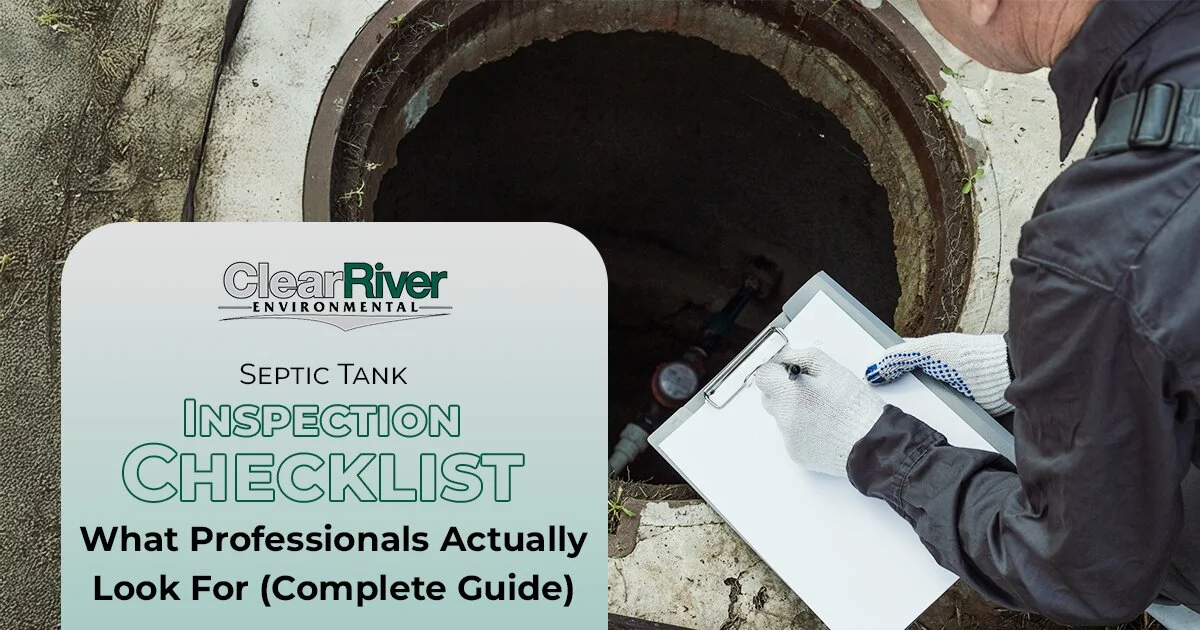
Septic Tank Inspection Checklist: What Professionals Actually Look For (Complete Guide)
- David Warren
- April 7, 2025
Most homeowners don’t think about their septic system inspection until something goes wrong.
A slow drain, a foul odor, or worse, a backup… and suddenly you’re dealing with a problem that could have been avoided with a simple inspection.
The truth is, a septic inspection isn’t just a routine check. It’s a detailed evaluation of an entire wastewater system, designed to catch issues early, protect your property, and prevent expensive repairs.
In this guide, we’ll walk you through a real septic tank inspection checklist used by professionals. So you understand exactly what’s being checked, why it matters, and how to stay ahead of potential failures.
In This Article
What Is a Septic Tank Inspection?

A septic tank inspection is a comprehensive assessment of your septic system, including the tank, pipes, and drain field, to ensure everything is functioning properly and safely.
Unlike a quick visual check, a professional inspection goes deeper by evaluating:
- Structural integrity of the tank
- Waste levels and system balance
- Flow efficiency throughout the system
- Drain field performance
- Early warning signs of failure
The goal is simple: identify problems before they turn into costly emergencies.

Why a Proper Septic Inspection Checklist Matters
Not all inspections are equal.
Some are quick “look and go” checks, while others follow a structured checklist that ensures nothing is missed.
A professional checklist-based inspection helps:
- Prevent unexpected system failures
- Extend the lifespan of your septic system
- Protect groundwater and surrounding environment
- Avoid emergency repairs that cost thousands
Missing even one step can lead to hidden damage going unnoticed.
Complete Septic Tank Inspection Checklist (Step-by-Step)

Below is what a professional septic inspector actually evaluates, broken down in detail.
1. Tank Structural Condition
The inspection starts with the septic tank itself.
The inspector carefully opens the tank and examines its overall condition.
What’s Checked:
- Cracks or fractures in the tank walls
- Signs of corrosion (especially in older systems)
- Structural weakening or collapse risks
- Proper water level inside the tank
Why It Matters
A compromised tank can leak untreated wastewater into the surrounding soil, leading to contamination and system failure.
2. Sludge and Scum Levels
Inside the tank, waste separates into three layers:
- Sludge (bottom)
- Effluent (middle)
- Scum (top)
Inspectors measure these levels to determine:
- Whether the tank needs pumping
- If the system is overloaded
- How efficiently waste is being processed
Red flags include:
- Excessive sludge buildup
- Imbalanced waste layers
- Rapid accumulation between inspections
This is one of the most important indicators of system health.
3. Inlet and Outlet Pipes
These pipes control the flow of wastewater into and out of the tank.
Inspection Includes
- Checking for blockages or clogs
- Ensuring proper alignment
- Verifying smooth wastewater flow
Common Issues
- Root intrusion
- Grease buildup
- Pipe misalignment
Even a small blockage can disrupt the entire system.
4. Baffles and Effluent Filters
Baffles play a critical role in directing wastewater flow and preventing solids from entering the drain field.
Inspectors Check
- Whether baffles are intact or broken
- If they are properly positioned
- Condition of effluent filters
Why This Matters
If baffles fail, solid waste can enter the drain field, leading to irreversible damage.
5. Drain Field (Leach Field) Inspection
The drain field is where treated wastewater is dispersed into the soil.
It’s also one of the most expensive parts of the system to repair.
Inspectors Look For
- Standing water or soggy areas
- Unusual odors in the yard
- Patchy or overly green grass
- Soil saturation
These signs often indicate drain field failure, which can cost thousands to fix.
Must Read: Septic Tank Pumping Cost
6. Signs of Leaks, Backups, or System Stress
Beyond the tank, inspectors assess the overall system performance.
They check for:
- Wet spots near the tank
- Sewage odors inside or outside the home
- Slow drains or gurgling sounds
- Backup signs in plumbing fixtures
These symptoms often appear before a major failure occurs.
7. System Age and Maintenance History
A septic system’s lifespan depends heavily on maintenance.
Inspectors Reviews
- Age of the system
- Previous pumping records
- Repair history
- Usage patterns
Why This Matters
Older systems or poorly maintained ones are more likely to fail unexpectedly.
Additional Advanced Checks (Often Missed)
A high-quality inspection may also include:
- Dye testing to track leaks
- Hydraulic load testing
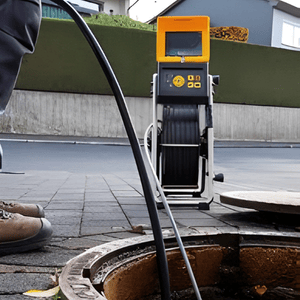
- Camera inspections of pipes
- Soil absorption analysis
These advanced checks provide deeper insights into hidden problems.
How Long Does a Septic Inspection Take?

A typical septic inspection takes 1 to 3 hours, depending on:
- System size
- Accessibility of components
- Overall condition
- Whether advanced testing is required
More complex systems may take longer, especially if issues are detected.
When Should You Schedule a Septic Inspection?
You don’t need to wait for a problem to arise.
You should schedule an inspection if:
- You’re buying or selling a home
- It’s been 2–3 years since the last inspection
- You notice odors or slow drainage
- Your system is over 10–15 years old
Regular inspections are the best way to avoid emergencies.
Also Read: Common Septic System Mistakes to Avoid
Common Problems Found During Inspections
Professional inspections often reveal issues homeowners don’t notice.
Common findings include:
- Overfilled tanks requiring septic pumping
- Cracked or deteriorating tanks
- Blocked or damaged pipes
- Failing drain fields
- Missing or broken baffles
Catching these early can save thousands in repairs.
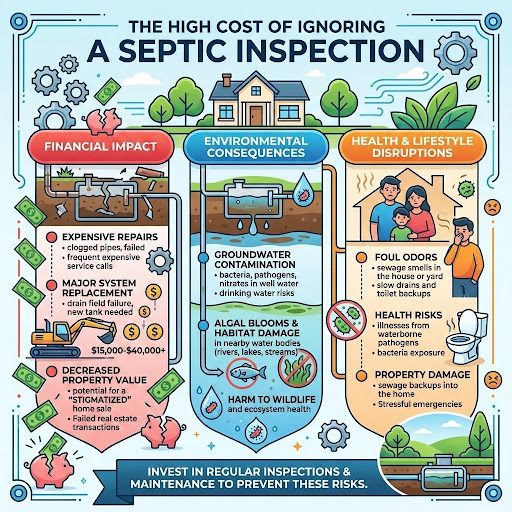
Cost of Ignoring a Septic Inspection
Skipping inspections might seem harmless, but it can lead to serious consequences.
Potential risks:
- System failure and backups
- Property damage
- Health hazards from exposure
- Expensive replacements (often $10,000+)
- A simple inspection is far more affordable than a full system replacement.
Why Choose Us
At Clear River Environmental, we approach septic inspections with the same mindset homeowners expect—thorough, clear, and reliable.
A proper inspection isn’t just a quick look. Our technicians follow a detailed septic tank inspection checklist, carefully evaluating each part of the system so nothing is overlooked. We take the time to explain what we’re seeing, what it means, and whether any action is needed now or later.
You’ll always know where your system stands. No guesswork, no unnecessary recommendations—just honest insight you can plan around.
Final Thoughts
A septic system is one of the most important yet overlooked parts of your home.
It works silently in the background, but when it fails, the impact is immediate and costly.
Understanding this septic tank inspection checklist gives you clarity, control, and confidence in maintaining your system.
If there’s any doubt about your system’s condition, it’s always better to take action early. Before small issues turn into major problems.
FAQs Related Septic Inspection
It includes checking the tank condition, sludge levels, pipes, baffles, and drain field for leaks or damage.
Every 2–3 years, or more often for older or heavily used systems.
Usually 1 to 3 hours, depending on system size and condition.
Slow drains, bad odors, standing water, or frequent backups.
Typically between $150 and $500, depending on inspection type and location.
Get in touch with Us
David Warren, Vice President and one of the founding visionaries of Clear River Environmental, brings
deep expertise in environmental stewardship, residential services, and operational leadership. Since cofounding the company, he has been instrumental in guiding Clear River’s evolution from a local cesspool service to Long Island’s leading provider of plumbing, septic, and environmental solutions, completing over 25,000 installations to date.