How to Clean a Septic Tank Filter: DIY Guide for Long Island Homeowners
- David Warren
- June 10, 2026
If you own a home with a septic system, learning how to clean a septic tank filter is one of the simplest ways to avoid costly backups and repairs. Regular septic tank filter cleaning keeps wastewater flowing properly and protects the rest of your system.
This guide walks Long Island homeowners through every step, plus when it makes sense to call the professionals at Clear River Environmental.
In This Article
A Clean Septic Filter Helps Protect Your Whole System
A neglected septic tank filter can clog and send solids into your drain field, where damage gets expensive fast.
Keeping the septic system filter clean is preventative maintenance at its best, a 20-minute task that helps your entire system run efficiently for years.
What Is a Septic Tank Filter and Why Does It Matter?
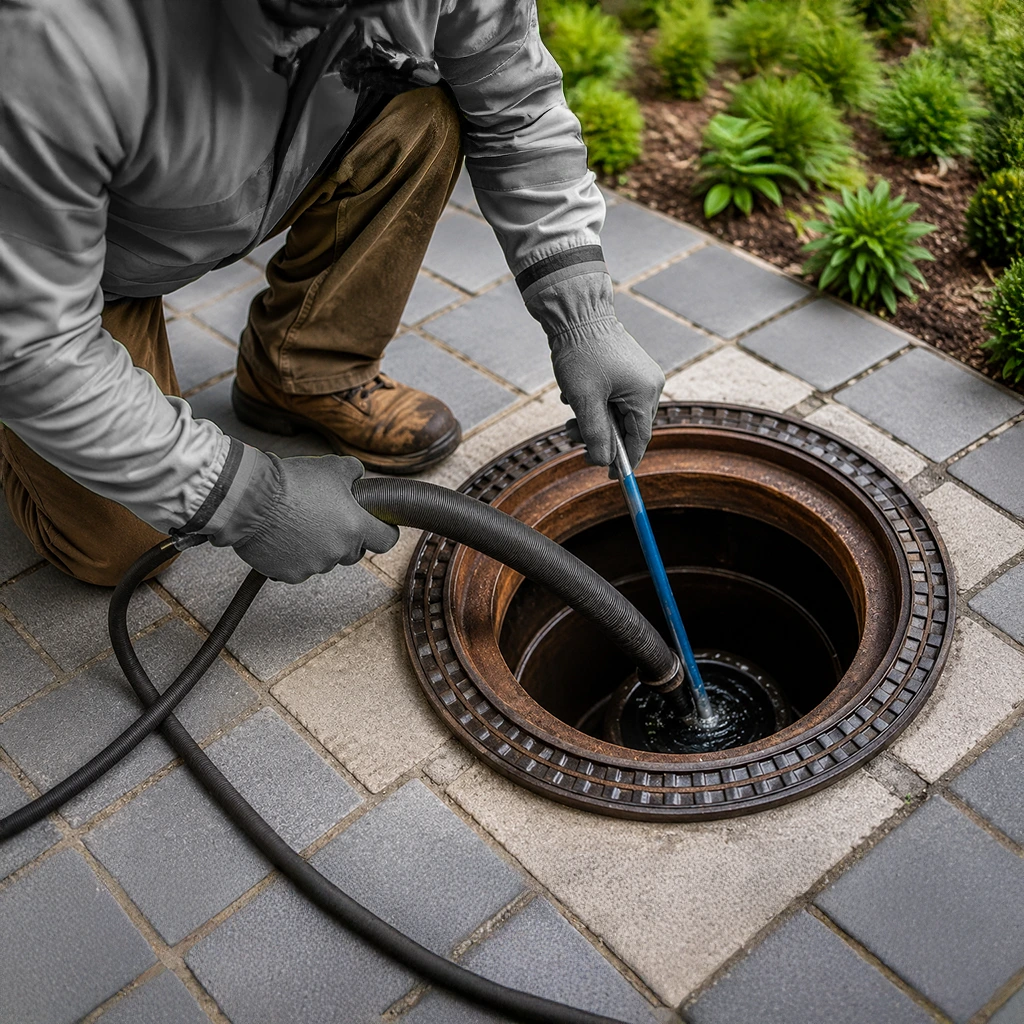 A septic tank filter, also called a septic system filter, is a removable screen installed in the outlet tee of your tank.
Septic tank effluent filters trap suspended solids before liquid effluent flows out to the drain field.
Why it matters:
- It prevents solids from clogging and ruining your leach field
- It extends the life of your entire septic system
- It reduces the risk of backups and slow drains
- It keeps treated wastewater cleaner before it returns to the soil
Without this filter, even small particles could migrate into the drain field, leading to repairs that cost thousands.
Signs Your Septic Tank Filter Needs Cleaning
Effective septic tank filter cleaning starts with recognizing warning signs. Your septic system filter may need attention if you notice:
- Slow drains throughout the house
- Gurgling sounds from toilets or pipes
- Sewage odors near the tank or drains
- Water backing up in low fixtures
- An alarm sounding (on systems equipped with one)
These symptoms often mean the filter is clogged and restricting flow.
Also Read: Signs Septic System Failing
Before You Start: Safety First
Septic gases and bacteria pose real health risks, so handle this task carefully.
- Wear rubber gloves, eye protection and old clothes
- Never lean into or breathe directly over an open tank
- Keep children and pets far away
- Work with a partner when possible
- Wash thoroughly when finished
If you ever feel lightheaded near the tank, step away immediately septic gases can be dangerous.
Where Is My Septic Tank Filter Located?
Homeowners often ask, “Where is my septic tank filter located?” The filter on septic tank systems sits inside the outlet baffle on the side closest to your drain field.
To find it:
- Check your septic system diagram or installation records
- Look for the access riser or lid above the outlet end of the tank
- The filter cartridge slides into a vertical housing in the outlet tee
If you can’t locate the lid, a professional can map your tank and install a riser for easier future access.
Tools You May Need to Clean a Septic System Filter
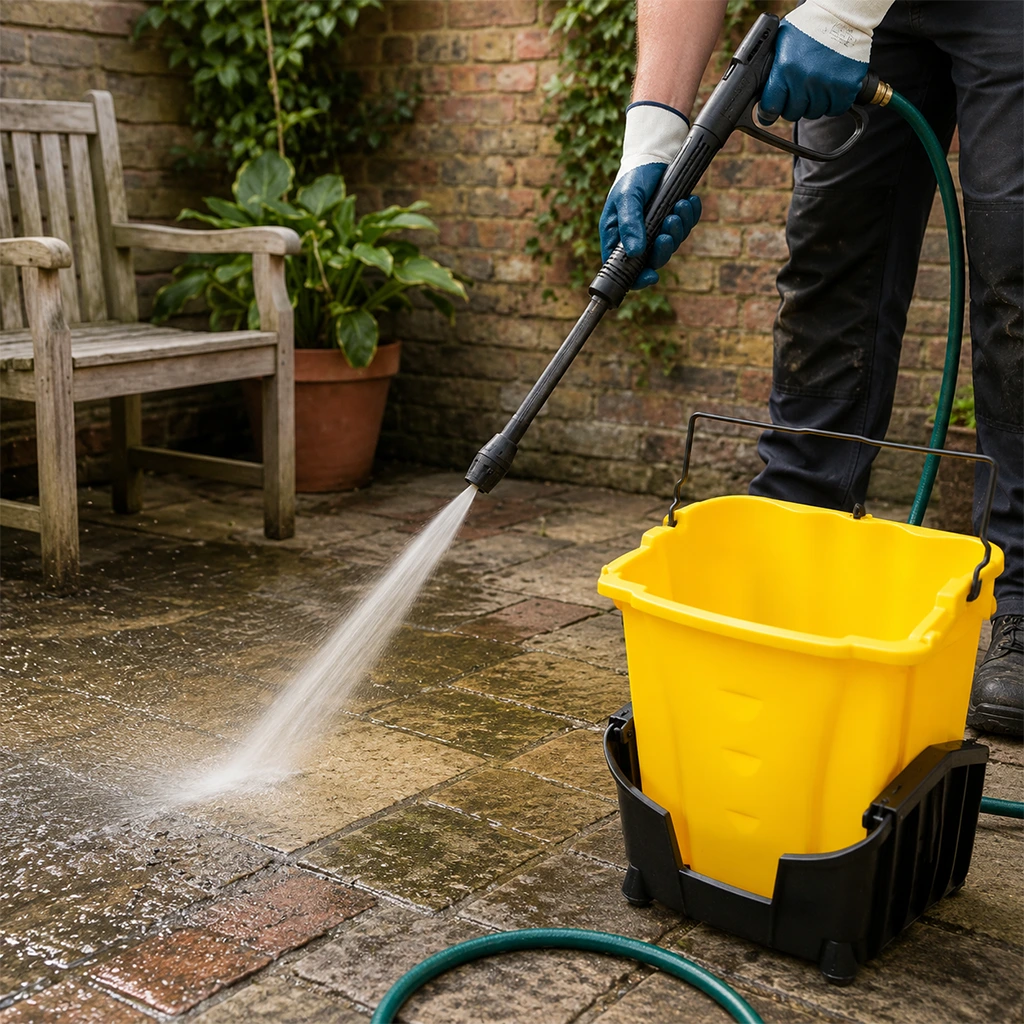
For basic septic system filter cleaning, you may need:
- Rubber gloves and protective eyewear
- A garden hose with a spray nozzle
- A bucket
- A flathead screwdriver or pry bar for the lid
- A face mask
- A flashlight
Having everything ready makes the job faster and cleaner.
How to Clean a Septic Tank Filter Step by Step
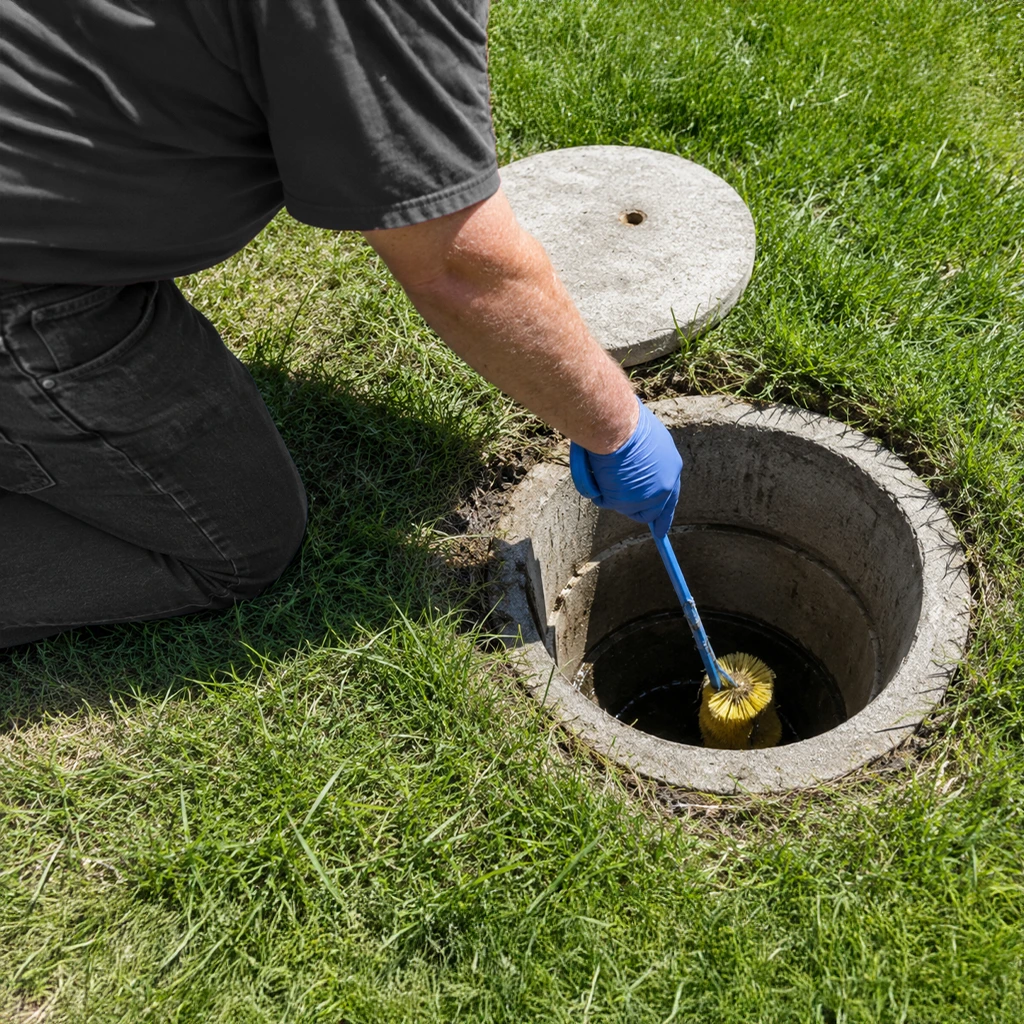
Follow this cleaning effluent filter septic tank routine carefully. Proper septic tank filter maintenance takes only a few minutes once you know the steps.
Step 1: Locate and Open the Access Lid Carefully
Follow this cleaning effluent filter septic tank routine carefully. Proper septic tank filter maintenance takes only a few minutes once you know the steps.
Step 2: Remove the Effluent Filter Slowly
Grip the filter handle and pull straight up in a slow, steady motion. Pulling too fast can knock trapped debris back into the tank or splash effluent. Lift it directly over a bucket to catch drips.
Step 3: Rinse the Filter With a Hose
Spray the filter thoroughly with a garden hose, letting the rinse water and solids fall back into the tank not onto the ground. Continue until the screen is free of buildup and you can see clean filter material.
Step 4: Reinstall the Filter and Secure the Lid
Slide the clean filter back into its housing in the same orientation it came out. Confirm it seats fully, then replace the access lid and press it down until it’s firmly secured. A loose lid is a safety hazard.
How Often Should Septic Tank Filter Maintenance Be Done?
 For most Long Island households, septic system filter cleaning should happen at least once a year. However, septic tank filter maintenance schedules vary based on:
- Household size and water usage
- Whether you use a garbage disposal
- The age and capacity of your tank
- Manufacturer recommendations
Larger families or heavy-use homes may need cleaning every six months. Pairing filter cleaning with routine pumping every 3–5 years keeps the whole system healthy.
DIY Cleaning vs Professional Effluent Filter Cleaning
Deciding between DIY and professional cleaning of the effluent filter septic tank service comes down to comfort and complexity.
DIY is a good fit when:
- The filter is easily accessible
- You’re comfortable handling the equipment safely
- The system shows no major warning signs
Professional cleaning is smarter when:
- The tank needs pumping at the same time
- You can’t locate or reach the filter
- There are recurring backups or odors
- You’d rather not handle septic waste yourself
Many homeowners alternate handling routine septic tank filter cleaning themselves and scheduling professional septic system filter cleaning during annual inspections.
When Long Island Homeowners Should Call Clear River Environmental?
Some situations call for trained technicians. Reach out to Clear River Environmental if you notice:
- Persistent sewage odors or backups after cleaning
- A drain field that stays soggy or smells
- A filter that clogs repeatedly in a short time
- Difficulty accessing or identifying your filter
- The need for pumping, inspection or repairs
Clear River Environmental serves Long Island homeowners with septic inspections, pumping and complete system maintenance giving you peace of mind that the job is done right.
Common Septic Filter Cleaning Mistakes to Avoid
Even simple septic tank filter maintenance can go wrong. Avoid these errors during septic tank filter cleaning:
- Rinsing the filter onto the lawn instead of back into the tank
- Reinstalling the filter upside down or partially seated
- Forgetting to wear protective gear
- Using harsh chemicals that disrupt the tank’s bacteria
- Ignoring the filter until a backup forces the issue
- Leaving the access lid loose or unsealed
Steering clear of these mistakes protects both your health and your system.
Keep Your Septic System Running Smoothly
A clean filter is one of the cheapest forms of insurance for your septic system. By learning how to clean a septic tank filter, watching for warning signs and staying on a regular septic system filter cleaning schedule.
Long Island homeowners can avoid backups and protect their investment. When the job calls for a professional touch, Clear River Environmental is ready to help keep your system running smoothly for years to come.
FAQs Related Septic Tank Filter Cleaning
Yes, some homeowners can learn how to clean septic tank filter components safely. However, DIY cleaning is only recommended when the filter is accessible, the lid is safe and there are no signs of backup, odors or system failure.
A clogged septic system filter can slow wastewater flow, cause backups and place stress on the tank and drain field. Regular septic system filter cleaning helps prevent these problems.
Not all older tanks do, but most modern systems include one. Adding an effluent filter is a smart upgrade.
Yes, septic tank filter cleaning is often done during pumping or routine maintenance. This allows the technician to inspect the filter, tank level and overall system condition at the same time.
Get Our Services
Plumbing Services
Repairs, maintenance and installation
Sewer & Drain
Drain cleaning &
sewer line repairs
Cesspool Services
Cesspool pumping, cleaning & waste disposal
Septic Services
Septic system installation, maintenance, and repair
Get in touch with Us

David Warren, Vice President and one of the founding visionaries of Clear River Environmental, brings
deep expertise in environmental stewardship, residential services, and operational leadership. Since cofounding the company, he has been instrumental in guiding Clear River’s evolution from a local cesspool service to Long Island’s leading provider of plumbing, septic, and environmental solutions, completing over 25,000 installations to date.


