New Construction Plumbing: Three Stages Every Homeowner Should Know
- David Warren
- June 14, 2026
Building a new home is exciting, but what happens behind the walls matters just as much as the finishes you can see. The plumbing system is the hidden network that keeps your home safe, sanitary and functional for decades.
Understanding the three stages of new construction plumbing helps you stay informed, avoid costly mistakes and know exactly when to bring in a trusted plumber for new construction like Clear River Environmental.
In This Article
Before the Walls Close, Your Plumbing Plan Needs to Be Right
Once drywall goes up and concrete is poured, fixing plumbing errors becomes expensive and disruptive. That’s why plumbing a new house demands careful planning at every phase.
Getting residential new construction plumbing right the first time protects your investment and prevents leaks, low pressure and drainage headaches down the road.
What Is New Construction Plumbing?
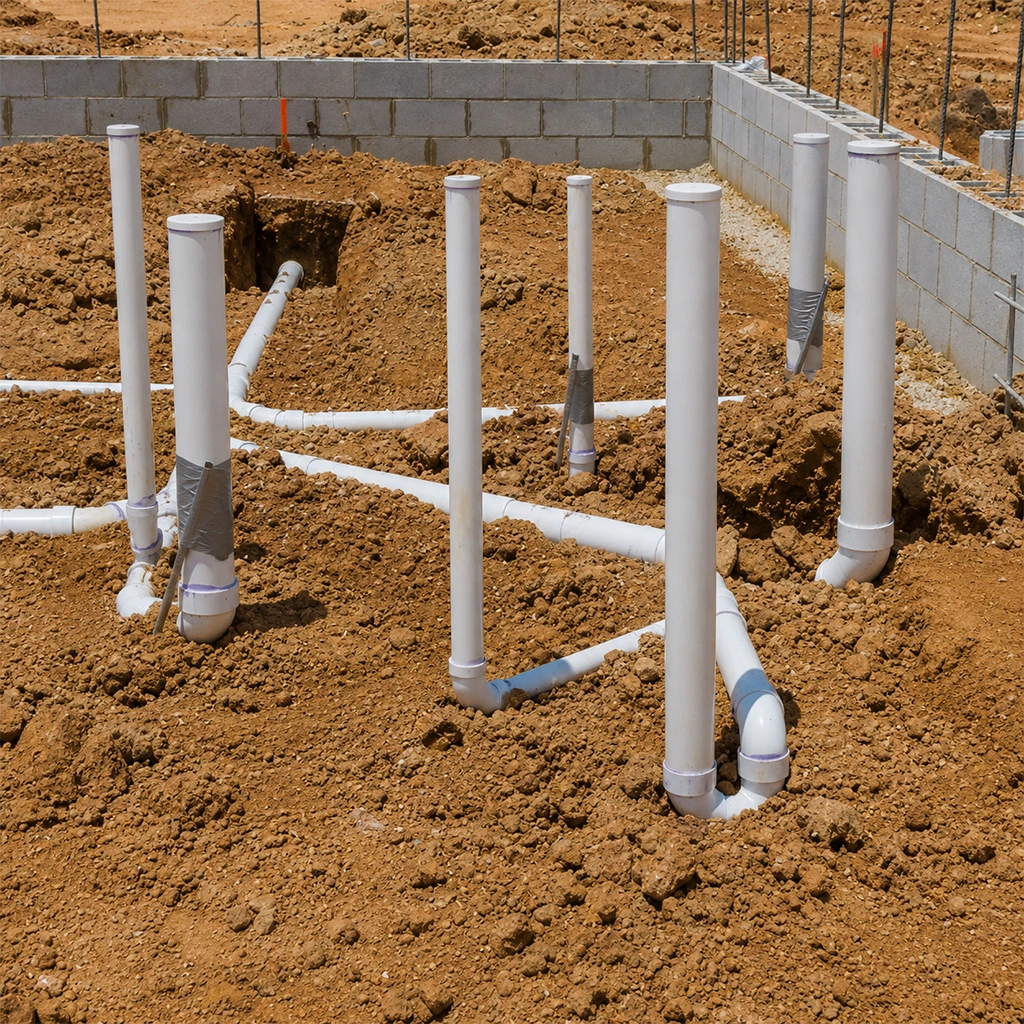 New home construction plumbing is the complete installation of a home’s water supply, drainage and venting systems from the ground up.
The process unfolds in three carefully sequenced stages, each requiring inspection before the next begins.
Stage 1: Underground Rough-In
The Underground Rough-In is the foundation of all plumbing in new construction. This work happens before the concrete slab is poured because once that concrete sets, changes mean jackhammers and major costs.
What Happens During Underground Rough-In?
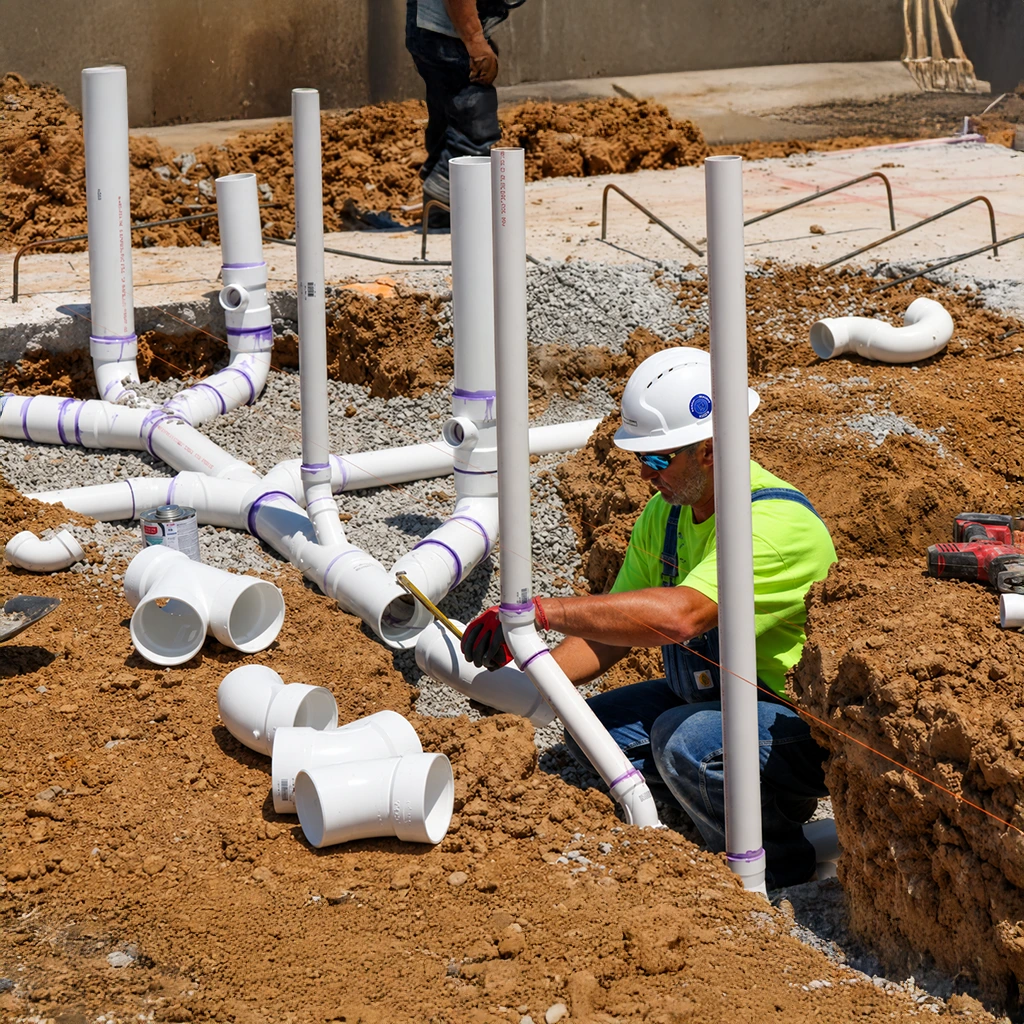
During Underground Rough-In, plumbers install the new plumbing system components that live beneath your home, including:
- Main water supply and sewer lines entering the building
- Drain pipes for toilets, showers and sinks under the slab
- Proper drain slope for effective wastewater flow
- Connections to the municipal sewer or septic system
Homeowner Checklist Before Underground Plumbing Begins
- Confirm final fixture and bathroom locations
- Verify the layout matches approved blueprints
- Account for future additions like a basement bath
- Ensure permits and inspections are scheduled
Stage 2: Rough-In Plumbing
Once framing is complete and the roof is on but before insulation and drywall the rough in plumbing new construction phase begins. This is where the system’s skeleton takes shape inside the walls.
What Gets Installed During Rough-In?
This stage of plumbing a new house focuses on everything hidden behind walls and above ground:
- Water supply lines to every fixture
- Drain, waste and vent (DWV) piping
- Vent stacks for proper air circulation
- Gas lines, where applicable
- Pressure testing to confirm a leak-free system
A critical part of rough in plumbing new construction is the inspection. The entire plumbing system installation must pass a rough-in inspection before walls are closed.
Common Rough-In Mistakes Homeowners Should Avoid
- Skipping pressure tests before drywall goes up
- Incorrect drain slope causing slow drainage
- Poorly placed vents leading to sewer odors
- Failing to plan for future fixtures
Avoiding these errors during plumbing in new construction saves significant money later. Working with an experienced residential new construction plumbing team is the surest way to get it right.
Stage 3: Trim-Out Plumbing
The final stage is the one homeowners actually see and use every day. Trim out plumbing transforms a rough framework into a fully operational new plumbing system.
What Happens During Trim-Out Plumbing?
Once walls are painted and flooring is installed, trim out plumbing brings everything online through final plumbing system installation steps:
- Installing sinks, faucets, toilets, tubs and showers
- Connecting the water heater and appliances like dishwashers
- Sealing and caulking fixtures
- Testing water pressure, drainage and connections for leaks
After a final walkthrough and inspection, your home is ready for everyday use.
New Construction Plumbing Checklist
Keep this plumbing checklist for new construction handy throughout your new home construction plumbing project:
✅ Approved plumbing layout and permits in place
✅ Underground rough-in installed and inspected
✅ Above-ground rough-in completed and pressure-tested
✅ Rough-in inspection passed before drywall
✅ Fixtures and appliances installed during trim-out
✅ Final inspection and leak testing completed
What Affects the Cost of Plumbing for New Construction?
 The cost for plumbing new construction varies widely depending on your home’s size and complexity. Several factors influence the final price:
- Square footage and number of bathrooms
- Pipe material (PEX vs. copper vs. PVC)
- Fixture quality and quantity
- Whether the home connects to municipal sewer or septic
- Local labor rates and permit fees
Getting a detailed quote upfront keeps your budget on track.
Why Long Island Homeowners Should Hire a Licensed New Construction Plumber
Hiring an experienced plumber for new construction isn’t just convenient it’s essential for safety and code compliance.
Quality residential new construction plumbing protects your home from leaks, water damage and failed inspections that can stall your entire build.
A licensed professional brings:
- Knowledge of local building codes
- Proper permits and inspection coordination
- Pressure testing and quality assurance
- Long-term reliability you can depend on
When Should You Schedule Plumbing System Installation?
Timing your plumbing system installation correctly is key to a smooth build. The phases of plumbing a new house follow the construction sequence:
- Underground rough-in: Before the foundation slab is poured
- Above-ground rough-in: After framing, before insulation and drywall
- Trim-out: After painting and flooring, near project completion
Coordinating with your general contractor ensures plumbers arrive at exactly the right moments.
Local Considerations for Long Island Homes
Long Island homes face unique requirements. Many properties rely on new home construction plumbing that connects to septic systems rather than municipal sewer, which adds important steps to the process. When working with a plumber for new construction here, consider:
- Suffolk and Nassau County code compliance
- Septic system or innovative/alternative (I/A) system tie-ins
- Soil and groundwater conditions affecting underground rough-in
- Coastal and high-water-table considerations
Clear River Environmental’s local expertise ensures your system meets every regional standard.
Planning Plumbing for a New Home?
Understanding the three stages of new construction plumbing Underground Rough-In, Rough-In and Trim-Out empowers you to make smart decisions and avoid costly surprises. From the first pipe beneath your foundation to the final fixture, every stage matters.
When you’re ready to build with confidence, trust an experienced plumber for new construction who knows Long Island inside and out. Contact Clear River Environmental today to ensure your new home’s plumbing is installed right the first time.
FAQs About New Construction Plumbing
Hire your plumber for new construction during the design phase, before ground breaks. Early involvement ensures the layout is efficient and code-compliant from day one.
Underground Rough-In is the first stage, where main water, sewer and drain lines are installed beneath the foundation before the concrete slab is poured.
The cost for plumbing new construction typically ranges from $8,000 to $12,000 for a standard home, depending on size, materials and fixture choices.
Rough in plumbing new construction includes water supply lines, drain-waste-vent piping, vent stacks, gas lines and pressure testing all completed before walls are closed.
Trim out plumbing is the final stage, where visible fixtures like sinks, faucets, toilets and appliances are installed and tested.
Yes. A rough-in inspection is required during plumbing in new construction to confirm the system meets code before drywall is installed.
Get Our Services
Plumbing Services
Repairs, maintenance and installation
Sewer & Drain
Drain cleaning &
sewer line repairs
Cesspool Services
Cesspool pumping, cleaning & waste disposal
Septic Services
Septic system installation, maintenance, and repair
Get in touch with Us

David Warren, Vice President and one of the founding visionaries of Clear River Environmental, brings
deep expertise in environmental stewardship, residential services, and operational leadership. Since cofounding the company, he has been instrumental in guiding Clear River’s evolution from a local cesspool service to Long Island’s leading provider of plumbing, septic, and environmental solutions, completing over 25,000 installations to date.


